

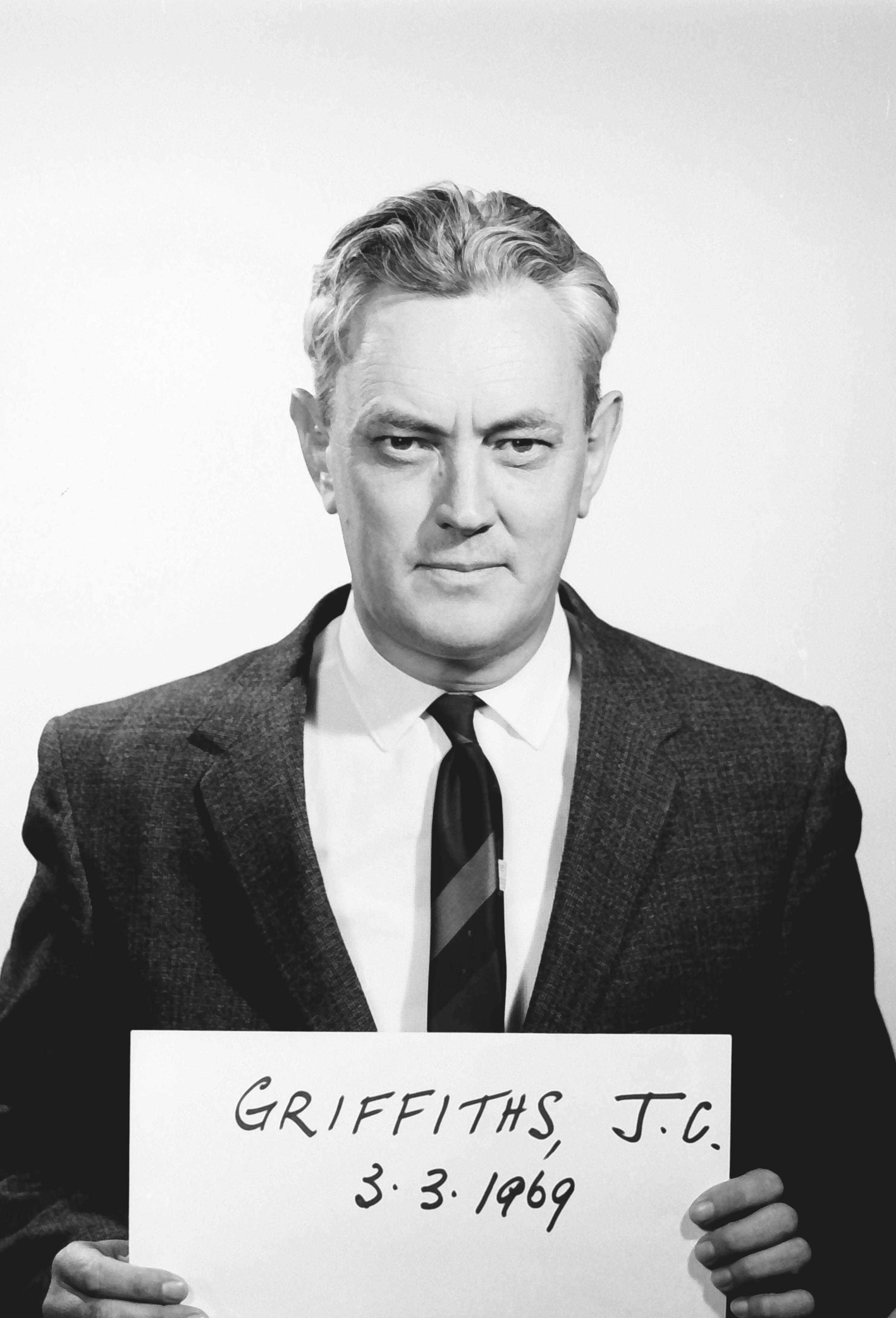
When Jack Griffiths joined ASIO as one of its first officers, he was considered a typical recruit of the time: a fit, young, white male with previous experience as a signalman and cipher operator in the Army. But he took a pioneering stance on the discrimination homosexual men faced in the late 1960s.
Jack joined ASIO on 12 September 1949 in the Canberra office, working with a handful of other officers to establish Australia’s new security service.
ASIO was on the hunt for Russian spies lurking in the nation’s capital, and Jack was quickly placed on surveillance duties. From his car, Jack would photograph newly arrived Russian diplomats as they emerged from suit fittings at Bob White’s tailor and outfitter’s shop in the Canberra suburb of Kingston.
Just a few years later, he was following future defector Vladimir Petrov through Canberra’s streets as the Russian well-known communist journalist Rex Chiplin. Jack was also in the thick of Operation Wanderer – ASIO’s extensive surveillance of the Soviet Embassy. When the ASIO staff car wasn’t available Jack would set off on his bicycle for surveillance shifts on chilly Canberra evenings.
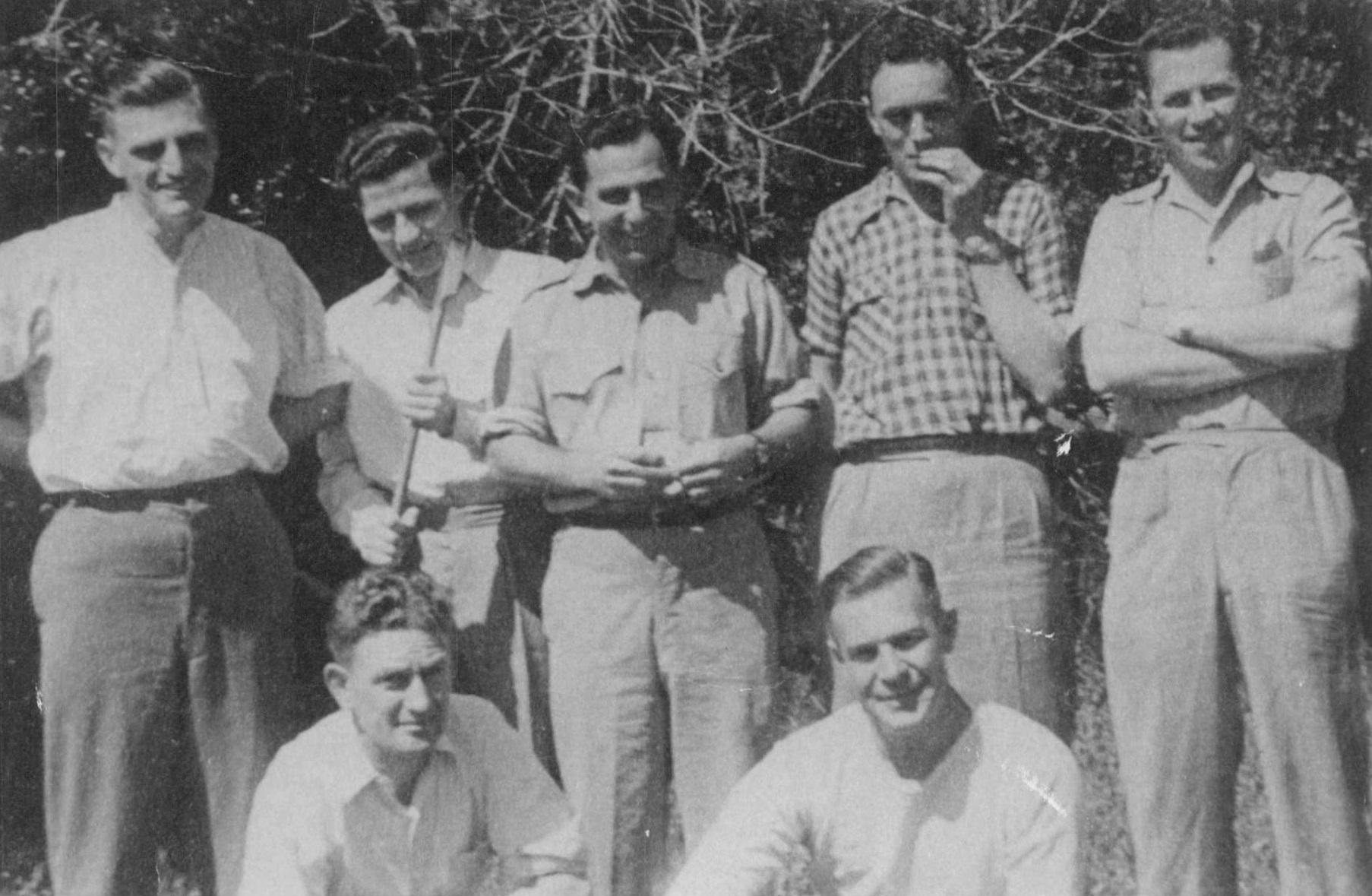
As the decade rolled on Jack rose through the ranks, and by the early 1960s was a senior field officer – running agents, collecting intelligence and watching targets.
In Adelaide in 1963, he was part of a surveillance team on the now famous operation to oust Ivan Skripov as a Russian spy, before moving on to investigations into emerging Croatian extremist groups.
At the time, ASIO was a small organisation and officers worked long hours which kept them away from their families. Jack had a wife and 3 children. His family remembers that he never disclosed what he was working on.
“Jack was a good husband and always aware of the extra time he spent at work in the early evenings and for the times he was away from home,” a Griffiths family member says. “He always tried to make it up by having social holidays with the family at Christmas and supporting his wife’s and children’s interests.”
In the 1960s, Jack was given a job he loathed, and strongly believed ASIO should abandon. What Jack opposed so strongly – and successfully lobbied to change – existed in the intersection of perceptions of the time around spying, sexuality and secrets.
One of ASIO’s key responsibilities was to vet and approve existing public servants and applicants for Secret and Top Secret clearances. ASIO’s role was to establish whether an employee was vulnerable to exploitation by a foreign intelligence service. Homosexuality was considered a vulnerability. A gay man in the Australian Public Service in the 1960s would likely be living with the fear that their sexuality could be used against them and ruin their career.
Intelligence organisations in Australia, along with other international security agencies were suspicious of gay men in government jobs who might have access to sensitive information, especially after the 1962 case of British civil servant John Vassall. While working in the USSR, Vassall – who was gay – was blackmailed into passing information to the Soviets after a honeypot operation, and sentenced to 18 years in prison. ASIO was aware of a Soviet intelligence handbook which outlined how to target and recruit gay members of the diplomatic corps.
Vassall’s story also attracted the attention it did because high-profile defectors Guy Burgess and Donald Maclean – who betrayed the UK in the 1950s – were thought to be homosexual. Public commentary about these cases led to a man’s sexuality being seen as a security risk.
CABINET DECISION No 432
On 1 September 1964, Federal Cabinet handed down Decision No 432, which declared homosexuality a ‘serious character defect’ and therefore a security risk. This meant that any man thought to be homosexual would be banned from holding any public service role in which he could access highly classified information.
This directive followed ASIO Director-General Charles Spry’s recommendation that public service department heads and agencies be directed to tell ASIO of any employee or job applicant they suspected might be a ‘practicing homosexual’, so that ASIO could take action to prevent the person accessing to classified material.
Lesbianism was not illegal and the Cabinet decision did not mention women. However, being a gay woman was still seen as an exploitable character weakness, and one woman was sacked from ASIO for being a lesbian.
ASIO began to interview public service employees suspected of being homosexual and put their names into a list. Jack Griffiths was put in charge of developing the list and conducting the interviews.
Speaking to ASIO’s official historians years later, Jack recalled: “It was the most unpleasant job. I did not enjoy it.”
Among those interviewed by Jack was a man who was about to be posted overseas who subsequently did not get to go, because he was gay. The directive did not allow for each case to be assessed on its own merits. If a man was found to be homosexual his security clearance would be withdrawn.
“My own view was the policy was wrong,” Jack said. “I had a fundamental disagreement with it.”
Minute: Persons With Serious Character Defects
By 1970, social attitudes were changing, and so was ASIO’s view of the policy under Director-General Peter Barbour.
On 19 May 1970, Jack submitted an extensive memo to the Director-General in which he methodically outlined the case for change.
Jack argued that other international security agencies were able to assess each case on its individual circumstances, but ASIO’s only option was to deny a gay man a clearance.
He also pointed out that since the directive had come into force there had barely been any notifications from department heads about cases which needed to be investigated.
Ultimately, Jack stated if a man was open about his sexuality this neutralised any perceived security risk, but as it stood the policy was potentially counter-productive because an employee was likely to hide his sexuality for fear of the consequences.
ASIO subsequently informed the Government it was reviewing the policy.
In June 1970, Deputy Director-General Jack Behm had a meeting with Attorney-General Tom Hughes. DDG Behm asked Jack to attend the meeting, and he spoke with the Attorney-General about his experience interviewing ‘suspected homosexuals’.
By October of that year Director-General Barbour informed the AG that ASIO ‘does not have any special competence to evaluate information concerning personal integrity’ – meaning ASIO’s job was to resolve doubts only relating to a person’s security status, not character – and would discontinue its field inquiries.
In 1973, the Australian Parliament passed a motion in favour of decriminalising homosexual acts between consenting adults in private, and the directive was eventually changed.
Jack Griffiths had played an important role in this change, but his family never knew of it until it was revealed in the publication of ASIO’s official history.
“Jack did not discuss work matters around the dinner table or what he had achieved,” a Griffiths family member says. “Jack always observed his responsibility of secrecy, the importance of ASIO and what it meant for Australia and its security.”
ASIO Director-General Mike Burgess says Jack has left a lasting legacy.
“For me it’s an example that every one of our actions matter, and even in dark times, the actions of one person can chip away and make a difference,” he says. “Today ASIO strives to reflect the society it protects and does not discriminate against an individual on the basis of their gender, sexual orientation or their cultural or ethnic origins.” Modern ASIO is now a Gold Tier employer under the Australian Workplace Equality Index.
Jack, who is remembered as a ‘49er’, had a long career which included stints in Operations and National Estimates Section and Operations Research Section. He retired in 1987 after serving as the Regional Director of the Victorian office.
His family remembers him as a diligent person who was committed to his job and the broader community. He was a volunteer with the Australian Scout Association for 45 years, ultimately responsible for the training programs for Scout Leaders across Australia. In 1996 he was recognised for his service and was awarded an Order of Australia Medal.
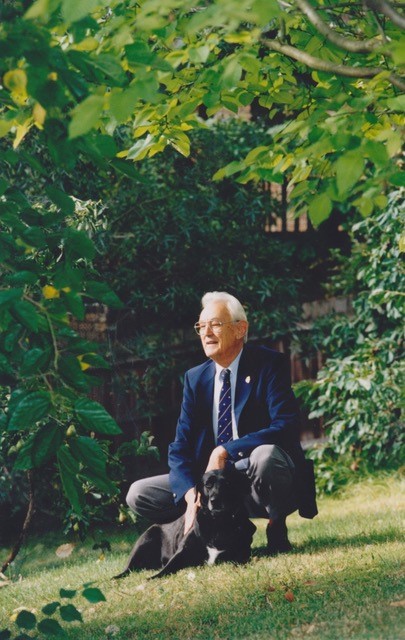
“His strong sense of contributing to the wellbeing of youth in his community and leadership qualities was demonstrated over many decades working with the Scouts” a Griffiths family member says.